Case study: Our food needs to be free of exploitation. Here is how the documentary THE PICKERS inspired a campaign across Europe with more than 10,000 event participants, a 40-day tour covering Switzerland, Italy, Austria, Germany, Belgium, and France, and handing over some 5,000 oranges wrapped in FAIR PICK messaging.
Campaign team
- Campaign strategist: Ben Kempas, Film & Campaign
- Impact producers: Tabita Knoblauch and Hannah Papacek Harper, Film & Campaign
- Database and finances: Aga Slawinska, Film & Campaign
- National outreach Germany and Austria: Daniela Grubert and Morgane Remter
- National outreach France and Belgium: Pénélope Bendrimia
- National outreach Italy: Elisa Trento
- National outreach Switzerland: Inès Bron
- Social media: Cleo Goodman
- Food systems consultation: Stan Blackley
- Film director: Elke Sasse
- Film licensing: Berlin Producers Media GmbH
- Campaign funding: Seedling Foundation and The StoryBoard Collective
- Official campaign partnerships: appellando, Agroecology Works!, Comité Contre l'Esclavage Moderne, Crowd Container, Fair Food Program, Fairtrade Italia, FIAN International, FIFDH Geneva Impact Days, Gebana, Good Food Good Farming, Initiative Lieferkettengesetz, No Cap, Oxfam Deutschland, Oxfam Intermón, SOS Rosarno, Swiss Fair Trade, WeWorld
The film and its intent
THE PICKERS is a film which brings us close to migrant workers who pick our daily fruit and veg in the southern parts of Europe. We are invited into their difficult working and living conditions to empathise with their plight: ramshackle accommodation, no regular employment, missing documentation, sexual harassment, and rip-off agency fees. The film also shows how growers suffer from market pressures, perpetuating the mistreatment of workers. The film, directed by Elke Sasse, also shows a positive example and asks: how can we start changing the system?
The film inspired a cross-European impact campaign with a focus on France, Germany, Italy, Switzerland, Austria, and Belgium. Throughout 2025, the campaign translated the film’s emotional and evidentiary power into a coordinated programme of awareness-raising, public engagement, and policy-oriented advocacy, demanding: 'We want a FAIR PICK.'
Key challenges
- How can we get consumers to care about who picks their food at a time when the cost of living forces them to buy the cheapest fruit and veg in supermarkets?
- How can we tackle the roots of a systemic issue and rope in the bigger players in the supply chain?
- Why is the Fairtrade label only concerned with the Global South, and why do Europe's biggest organic certifications not cover social responsibility?
- How can we support the implementation of protective grievance mechanisms to ensure that workers feel safe and corporations are compelled to act?
- How can we provoke empathy in decision makers and get them to push for better legislation and corporate accountability?
- Ultimately, how can we introduce dignity into the entire supply chain?
Funding and partners
Seedling Foundation and The StoryBoard Collective supported and funded the campaign throughout. Seventeen strategic partners and hundreds of host organisations amplified reach and credibility without compromising independence. Strategic partners ranged from migrant worker organisations like No Cap to retail-led complaint frameworks like Appellando. They include a number of fair trade organisations such as Swiss Fair Trade or Fairtrade Italia, as well as high-profile non-profits such as Oxfam and WeWorld.
Creating awareness: 'Meet THE PICKERS'
Migrant farm workers are simultaneously essential to food systems and structurally invisible to consumers, policymakers, and corporate actors. THE PICKERS Campaign sought to disrupt this invisibility by making workers visible, human, and politically relevant, while shifting responsibility away from individual consumer choice toward systemic accountability. In a play on supermarket advertising that tends to show off their great suppliers ('Meet our happy farmers'), we invite audiences to 'Meet THE PICKERS'.
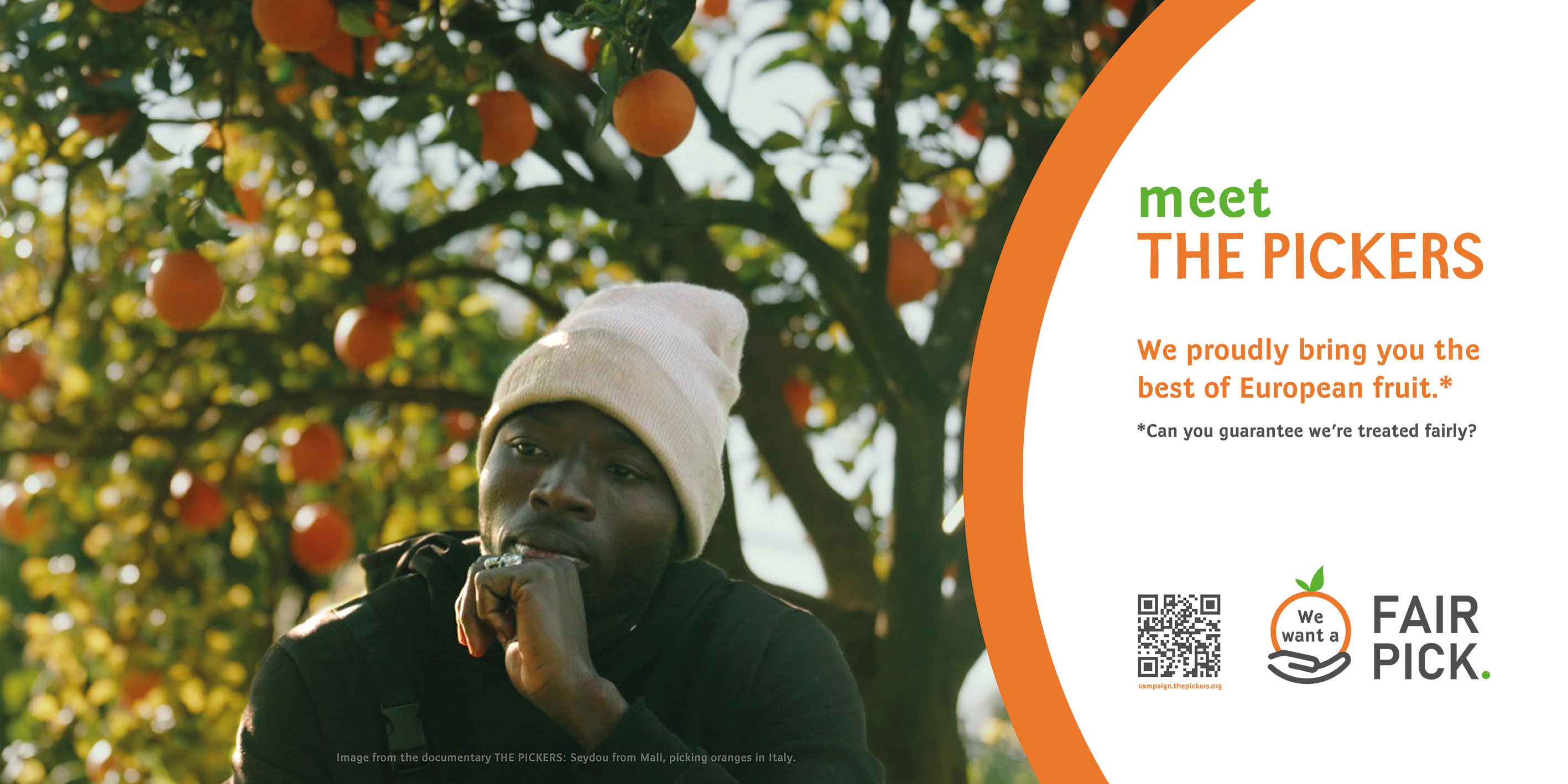
The 'Meet THE PICKERS' poster was used for advertising, event staging, and our refrigerated van
With visibility at its core, the most public-facing action was the 'Meet THE PICKERS' Tour, a 40-day, 10,000 km journey across Europe in a refrigerated van delivering ‘fair’ oranges wrapped in campaign messaging. In April and early May 2025, the tour took the team from farms and workers’ ghettos to unions, NGOs, and supermarket headquarters – symbolically linking production, exploitation, and consumption, while enabling hundreds of conversations that deepened the campaign narrative, often starting with the question: “Why do we have to point out that this orange from Europe has been picked fairly?”
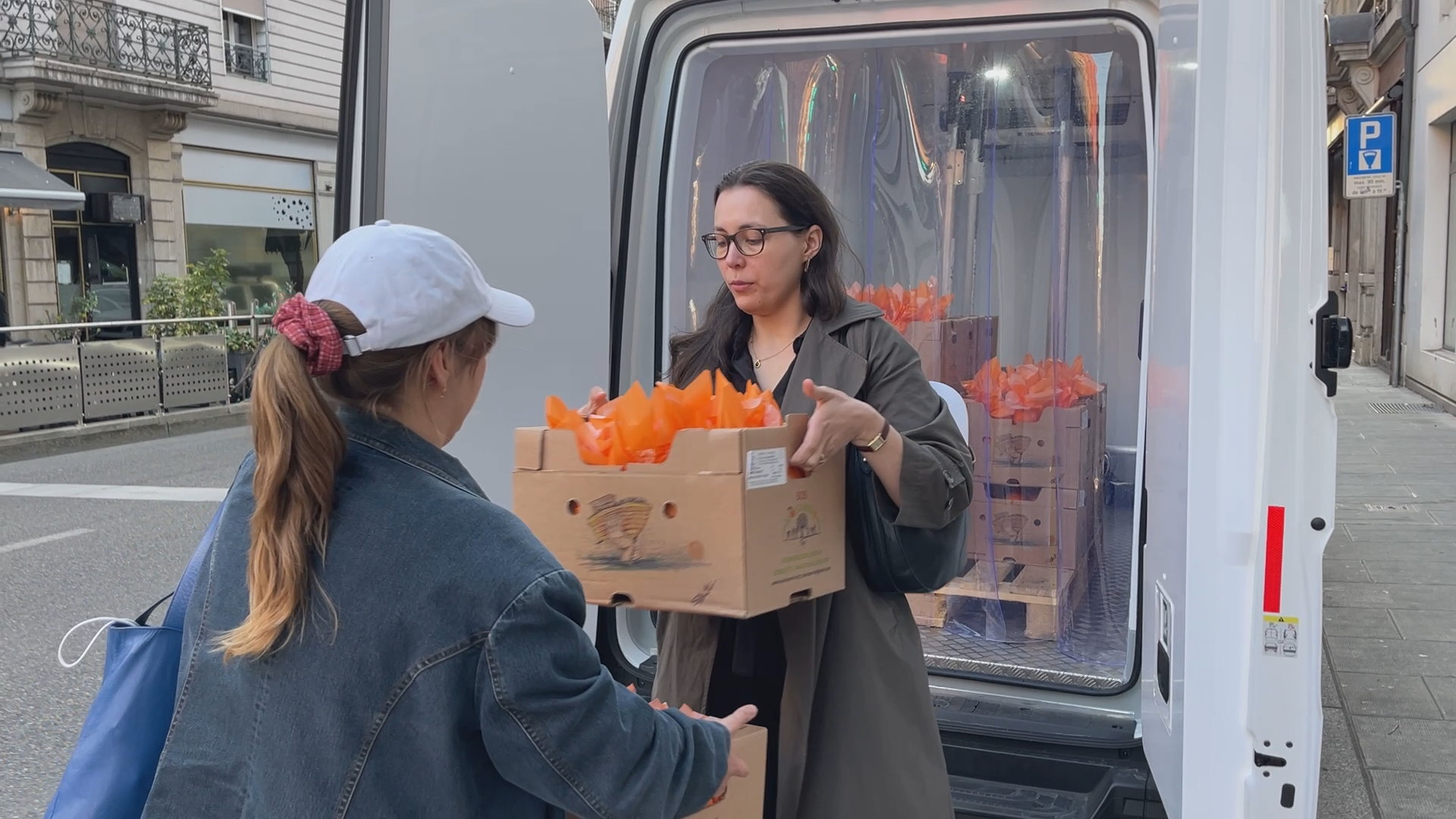
The Film & Campaign impact team unloading our oranges in FAIR PICK wrappers for an event in Geneva
The tour was followed by 'Meet THE PICKERS Events' from early June to mid-December 2025. More than 274 free public screenings – the vast majority of them community-hosted – took place as part of 323 total activities across Europe. Over 10,900 people attended events directly, and an estimated 677,000 people were reached through the event hosts' own promotion.
Call to Action: “We Want a FAIR PICK”
 Easily accessible online, through the use of a link or QR code, the call for a FAIR PICK articulates ten essential guarantees for migrant workers and has gathered 2,183 endorsements from individuals and organisations to date. Signatories were encouraged to personalise and publish their endorsements, reinforcing accountability rather than anonymous petitioning.
In Germany, campaign partners Oxfam and Initiative Lieferkettengesetz required our campaign to prioritise their own national petition to defend the German Supply Chain Act. While this reduced FAIR PICK signatures, it contributed to a successful 200,000-signature mobilisation that was formally handed to the German government in October 2025.

The Auxiliary Bishop in Cologne endorses our call for a FAIR PICK
Systemic Change: “Picking on the System”
The campaign has identified and proposed solutions in five core policy areas:
- corporate due diligence and supply chain legislation
- fair prices paid to producers, based on fair pay for workers and social costs
- fair labour mobility and removal of intermediaries
- conditionality of agricultural subsidies
- Worker-driven Social Responsibility (WSR).
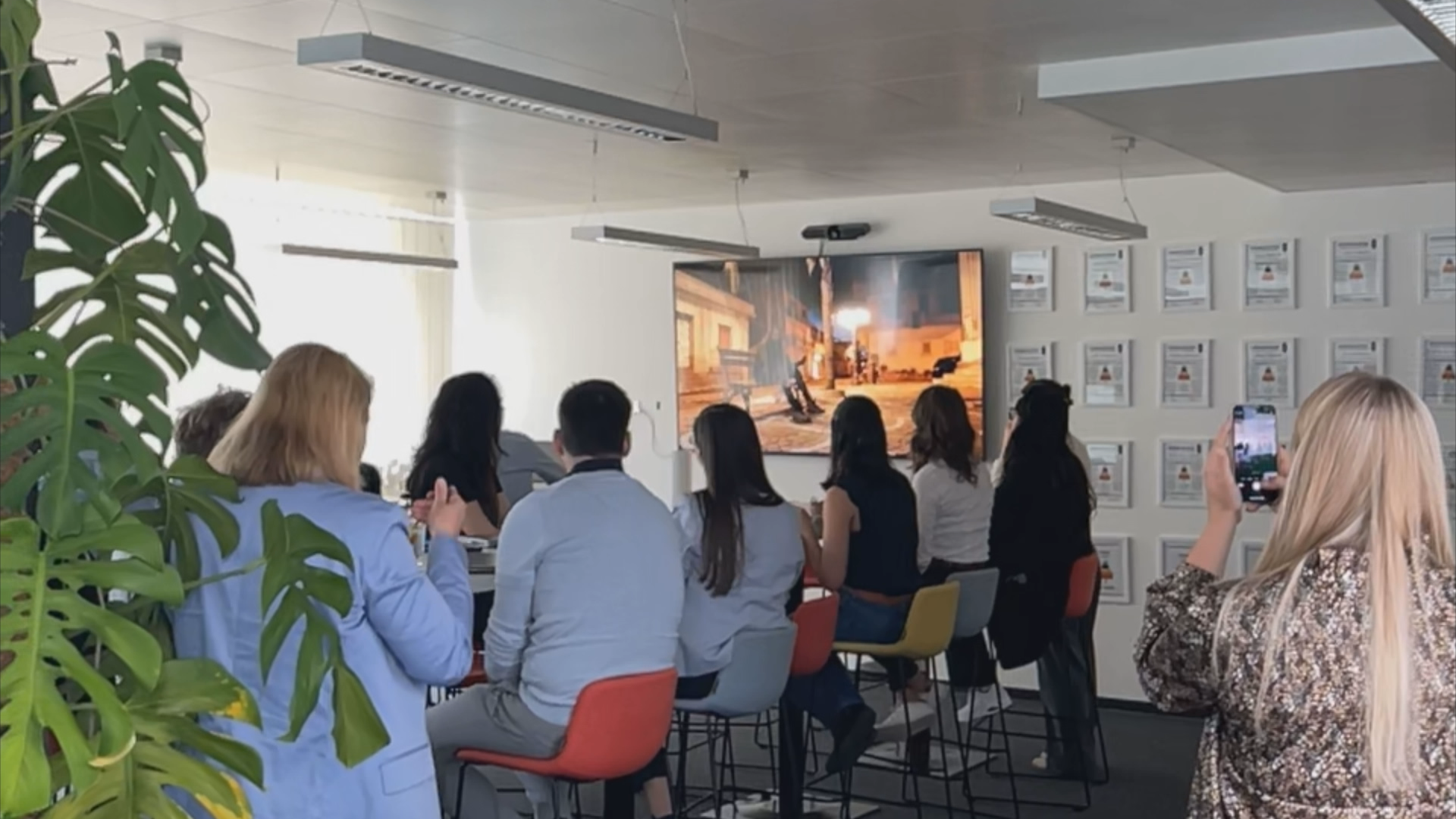
We took 'fair' oranges and the film to the global headquarters of ALDI Süd in Salzburg.
The campaign hosted high-level dialogue with retailers, unions, human-rights lawyers, and policymakers, including a European Parliament reception, sector debates online and in person, and international exchanges on the concept of Worker-driven Social Responsibility. These positioned THE PICKERS Campaign not as a confrontational protest but as a credible convening platform for reform.
From isolated abuse to systemic risk
THE PICKERS Campaign shifted how exploitation is understood inside the produce sector. Corporate and trade audiences increasingly acknowledged that labour abuses are not anomalies but structural risks produced by weak governance and price pressure. At ALDI Süd’s international headquarters, sustainability and buying teams accepted that grievances across European supply chains are rising and that enforcement, not voluntarism, is required.
Breaking Europe’s ethical blind spot
Fair-trade and organic organisations were encouraged to confront exploitation inside Europe’s own fields. This led to partnerships with Fairtrade Italia and Swiss Fair Trade and debates with organisations such as Bio Suisse about extending social standards to European production.
Informing the legislative process
THE PICKERS Campaign informed the debate in decisive political moments, including the defence of Germany’s Supply Chain Act, the successful launch of the Swiss people’s initiative for Corporate Responsibility, and the threats to the EU Corporate Sustainability Due Diligence Directive. The European Parliament event on 11 November 2025 provided reform advocates with a shared narrative just days before a crucial vote on the Commission’s Omnibus I package.
From film to local action
At community level, film screenings triggered cooperative buying initiatives, ethical sourcing reviews, and public conversations that linked climate, migration, and labour justice. Many participants discovered for the first time that 'organic' does not necessarily mean 'fair to humans'.
Introducing Worker-driven Social Responsibility (WSR)
By bringing the US-based Fair Food Program into European debate, THE PICKERS Campaign established WSR as a serious alternative to audits and voluntary codes. Unions, migrant worker groups, and Members of the European Parliament showed immediate interest, and exploratory pathways toward European collaborations are emerging in Germany and Italy.
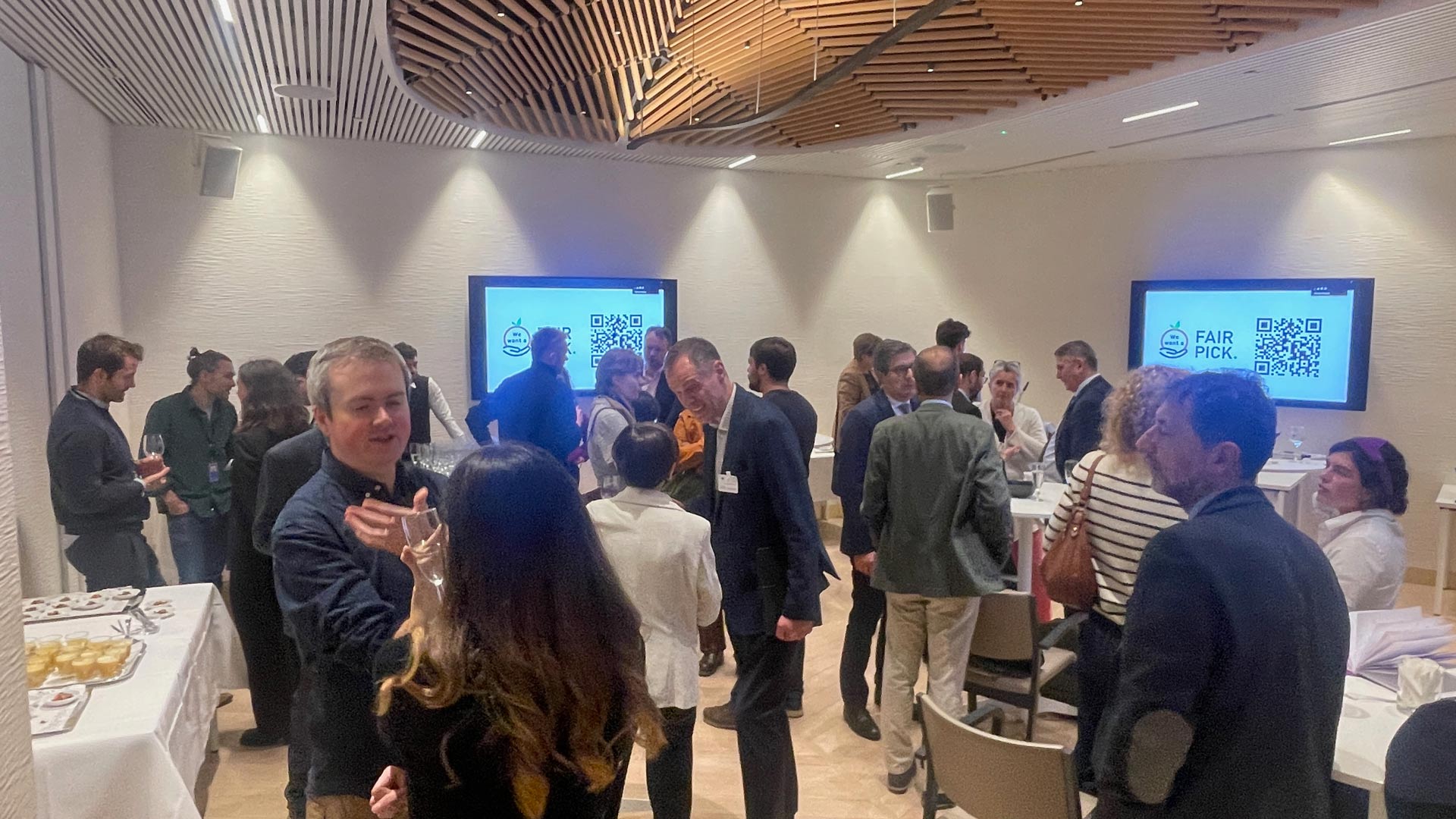
THE PICKERS Campaign hosting a presentation and reception in the European Parliament
THE PICKERS Campaign transformed a documentary into movement infrastructure. It has laid the foundations with engaged communities, institutional allies, corporate entry points, and a shared framework for reform.
Rather than closing with the final screening, the campaign encourages a new phase of European action on migrant workers’ rights, grounded in compassion, evidence, relationship-building, and political momentum.
We are now working with Swiss Fair Trade towards building a FAIR PICK Coalition.
Add your reaction
Sign in with
Facebook